Where to Buy GHK-Cu Research Peptide in Bulk
Where to buy GHK-Cu Research Peptide in Bulk. Collagen synthesis, tissue repair, antioxidant activity, and skin. Wholesaler Supplier.
Introduction to Copper Peptides in Research
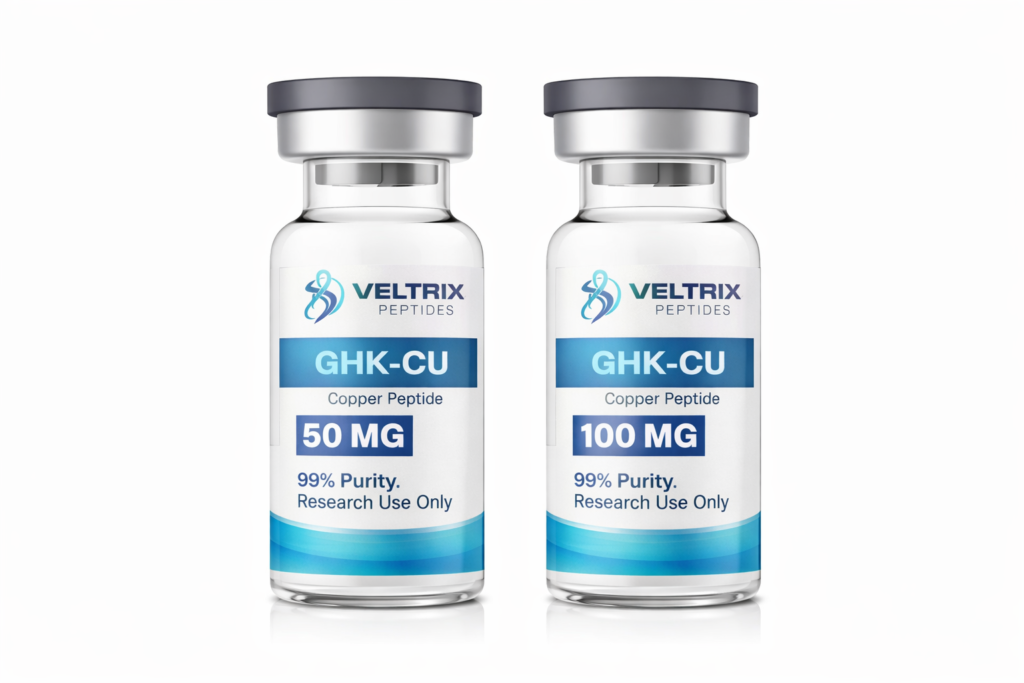
GHK-Cu, commonly referred to as copper tripeptide, is a naturally occurring compound identified in human plasma. It consists of three amino acids—glycine, histidine, and lysine—which bind to copper ions to form a biologically active complex. Researchers have extensively studied this peptide due to its potential involvement in cellular signaling, tissue repair, and extracellular matrix regulation.
Over time, GHK-Cu has gained attention in laboratory environments for its apparent role in influencing biological pathways associated with regeneration and structural support systems in tissues.
Biological Mechanisms and Cellular Signaling
Scientific investigations suggest that GHK-Cu may act as a signaling molecule that mimics the breakdown of collagen within tissues. When collagen fibers degrade, the release of specific peptide fragments may signal the body to initiate repair processes. GHK-Cu appears to replicate this signal, potentially activating fibroblasts—cells responsible for producing new collagen and maintaining tissue integrity.
In addition, research indicates that GHK-Cu may influence the balance between matrix metalloproteinases (MMPs) and their inhibitors (TIMPs). These molecules regulate the remodeling of the extracellular matrix. By potentially increasing both MMP-2 and TIMP levels, GHK-Cu may contribute to a controlled cycle of tissue breakdown and regeneration, maintaining structural equilibrium.
Effects on Tissue Repair and Wound Models
Experimental models have explored the peptide’s role in tissue repair and wound closure. Findings suggest that exposure to GHK-Cu may accelerate healing processes and improve tissue recovery rates. In certain studies, wound closure percentages significantly increased when compared to control groups, indicating enhanced regenerative activity.
Researchers have also observed elevated antioxidant levels, such as glutathione and ascorbic acid, in treated tissues. These compounds are known to protect cells from oxidative damage, which is critical during the healing process. Furthermore, increased fibroblast activity and immune cell involvement suggest that GHK-Cu may influence multiple stages of tissue repair.
Influence on Skin Structure and Collagen Production
GHK-Cu has been widely studied for its potential effects on skin architecture. Laboratory observations indicate that it may stimulate collagen synthesis, particularly type I collagen, which is essential for maintaining skin strength and elasticity.
In photodamage models, the peptide has been associated with improvements in skin density, thickness, and overall texture. Some studies also suggest that it may support keratinocyte proliferation, which plays a key role in maintaining the outer layer of the skin.
Additionally, when combined with compounds like hyaluronic acid, GHK-Cu may demonstrate synergistic effects, potentially enhancing collagen production and reducing degradation processes within the skin matrix.
Role in Fibroblast Activity and Cellular Regeneration
Fibroblasts are central to tissue repair and structural maintenance, and GHK-Cu appears to interact closely with these cells. Research suggests that the peptide may restore fibroblast function under stress conditions, including radiation-induced damage.
This interaction may lead to increased production of growth factors, which are essential for cellular regeneration. Enhanced fibroblast performance may contribute to improved tissue resilience and repair capacity in experimental environments.
Potential Impact on Hair and Skin Topography
Studies have also explored the peptide’s potential influence on skin appearance and hair follicle activity. Laboratory findings suggest that GHK-Cu may support dermal remodeling processes that reduce the appearance of wrinkles and improve skin texture.
In addition, some observations indicate that the peptide may stimulate hair follicle development and keratinocyte activity, suggesting a broader role in maintaining skin and hair structure.
Antioxidant and Anti-Inflammatory Properties
GHK-Cu has demonstrated potential antioxidant characteristics in experimental settings. It may interact with reactive oxygen species (ROS) and other free radicals that contribute to cellular damage.
Researchers have also suggested that the peptide may reduce oxidative stress by limiting iron release from ferritin, a process associated with inflammation and tissue degradation. This mechanism may help protect cells from damage and support overall tissue stability.
Emerging Research in Nerve and Stem Cell Biology
Beyond skin and tissue repair, GHK-Cu has been studied for its possible role in nerve regeneration. Experimental findings suggest that it may stimulate the production of nerve growth factors and support the regeneration of nerve fibers.
In stem cell research, the peptide has been linked to increased proliferation of epidermal stem cells and enhanced expression of key proteins involved in cellular renewal. These findings highlight its potential relevance in broader regenerative biology studies.
Investigations in Cancer-Related Models
Some research has explored the interaction between GHK-Cu and gene expression linked to cancer progression. Preliminary findings suggest that the peptide may influence genes associated with metastasis in experimental models.
While these observations are still under investigation, they contribute to a growing interest in the peptide’s regulatory effects at the genetic level.
Disclaimer
This content is intended strictly for educational and research purposes. The compounds discussed are not approved for human or animal consumption and are limited to laboratory research use only.
History
Loren Pickart (1938–2023) isolated the copper peptide GHK-Cu from human plasma albumin in 1973.[6] It was noticed that liver tissue obtained from patients aged 60 to 80 years had an increased level of fibrinogen. However, when liver cells from old patients were incubated in the blood from the younger group, the older cells started functioning in nearly the same way as the younger liver tissue.[7][8] It turned out that this effect was due to a small peptide factor that behaved similarly to the synthetic peptide glycyl-L-histidyl-L-lysine (GHK). Pickart proposed that this activity in human plasma albumin was a tripeptide glycyl-L-histidyl-L-lysine and that it might function by chelating metal ions.[9]
In 1977, the growth modulating peptide was shown to be a glycyl-L-histidyl-L-lysine.[10] It is proposed that GHK-Cu modulates copper intake into cells.[11]