

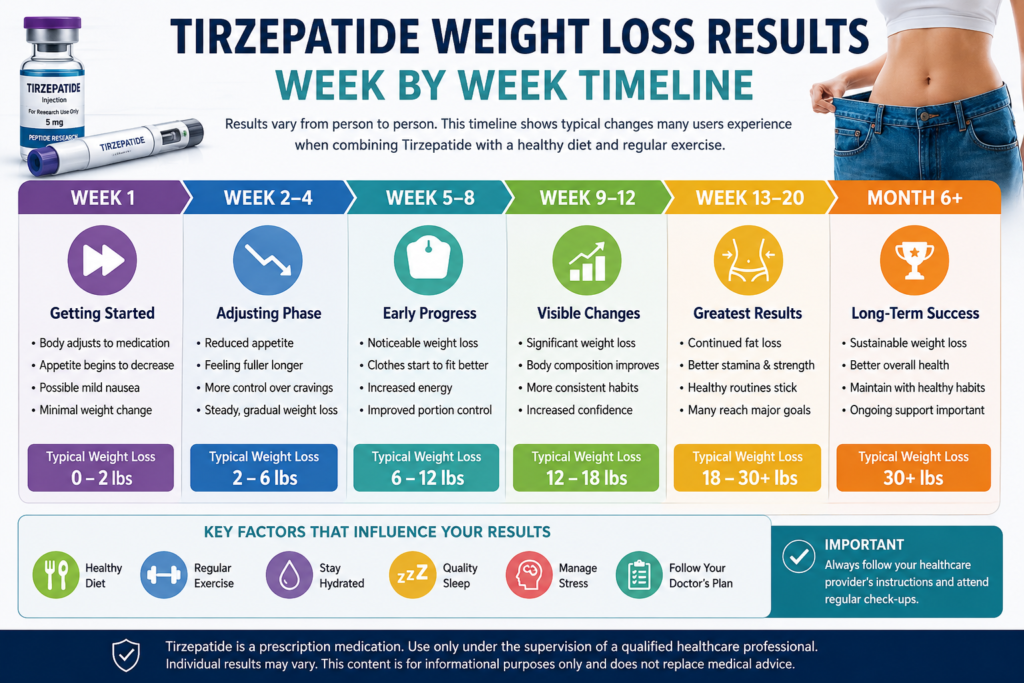
If you’re considering Tirzepatide for weight management, one of the first questions that likely comes to mind is, “How quickly will I lose weight?” While everyone’s journey is unique, understanding the typical week-by-week timeline can help you set realistic expectations and stay motivated throughout the process.
Unlike crash diets that promise rapid results, Tirzepatide supports gradual and sustainable weight loss by helping regulate appetite, improving blood sugar control, and increasing feelings of fullness. These effects often make it easier to reduce calorie intake naturally without constantly feeling hungry.
Many people begin noticing changes within the first few weeks, while more significant transformations usually develop over several months. Your progress will depend on several factors, including your starting weight, dosage, eating habits, physical activity, sleep quality, and overall health.
In this comprehensive guide, you’ll learn what many individuals experience during each stage of treatment, from the first injection through the following months. We’ll cover expected weight loss milestones, appetite changes, before-and-after expectations, practical lifestyle tips, common side effects, and frequently asked questions to help you better understand the journey.
Whether you’re researching Tirzepatide weight loss results, looking for a realistic Tirzepatide before and after timeline, or simply preparing for your first dose, this article provides evidence-based information presented in a clear and practical format. Buy Tirzepatide research peptide.
Table of Contents
- What Is Tirzepatide?
- How Does Tirzepatide Work for Weight Loss?
- Why Weight Loss Progress Differs Between Individuals
- Tirzepatide Weight Loss Results: Week 1
- Tirzepatide Weight Loss Results: Week 2
- What to Expect During the First Month
- Healthy Habits That Improve Early Results
What Is Tirzepatide?
Tirzepatide is an injectable peptide that belongs to a newer class of medications developed to improve blood sugar regulation while supporting significant weight loss in eligible patients. It works by activating two naturally occurring hormone receptors involved in appetite regulation and metabolism: glucose-dependent insulinotropic polypeptide (GIP) and glucagon-like peptide-1 (GLP-1).
Unlike traditional weight-loss methods that rely solely on calorie restriction, Tirzepatide works alongside the body’s natural hormonal systems. Many people report feeling satisfied after eating smaller meals, experiencing fewer cravings, and finding it easier to maintain a calorie-controlled eating pattern.
Because these biological changes develop gradually, meaningful weight loss typically occurs over weeks and months rather than days.
Healthcare professionals generally recommend combining Tirzepatide with:
- A balanced, nutrient-rich eating plan
- Regular physical activity
- Adequate hydration
- Consistent sleep habits
- Ongoing medical supervision
This combination supports healthier and more sustainable long-term results.
How Does Tirzepatide Work for Weight Loss?
Understanding how Tirzepatide works helps explain why weight loss follows a gradual timeline instead of producing immediate changes.
The medication influences several biological processes that contribute to long-term fat loss.
Appetite Suppression
One of the earliest changes many people notice is a reduction in hunger. Meals often become more satisfying, making it easier to consume fewer calories throughout the day.
Slower Stomach Emptying
Tirzepatide slows the movement of food through the stomach, helping you stay full for longer after eating. This may reduce unnecessary snacking between meals.
Improved Blood Sugar Regulation
Better blood sugar control can reduce energy crashes and cravings, making healthy food choices easier to maintain.
Better Portion Control
Many individuals naturally begin eating smaller portions because they feel comfortably full sooner than before starting treatment.
Long-Term Fat Loss Support
By consistently reducing calorie intake over time, Tirzepatide may help support gradual fat loss when combined with healthy lifestyle habits.
Why Weight Loss Progress Differs Between Individuals
No two people experience identical results with Tirzepatide. While one person may notice rapid progress during the first month, another may lose weight more gradually.
Several factors influence your results.
Starting Body Weight
People with a higher starting weight often experience greater initial weight loss, although this varies from person to person.
Dosage Progression
Healthcare providers usually increase the dosage gradually. This allows the body to adjust while helping reduce digestive side effects.
Nutrition
A diet rich in lean protein, vegetables, fruits, whole grains, and healthy fats supports better long-term outcomes than relying on medication alone.
Physical Activity
Walking, resistance training, and regular movement help preserve muscle while supporting healthy fat loss.
Sleep Quality
Consistently getting seven to nine hours of sleep may help regulate hormones involved in appetite and recovery.
Stress Levels
Chronic stress can influence eating behaviors and make weight management more challenging. Stress-management techniques may help support healthy habits.
Consistency
Taking Tirzepatide exactly as prescribed and maintaining healthy lifestyle habits are key components of long-term success.
Tirzepatide Weight Loss Results: Week 1
The first week is primarily an adjustment period. Most people should not expect dramatic weight loss immediately, but many begin noticing early changes in appetite and eating behavior.
Common Experiences During Week 1
Many individuals report:
- Reduced appetite
- Feeling full more quickly
- Less interest in snacking
- Improved portion control
- Increased awareness of hunger cues
Some people notice a small decrease on the scale, while others experience little or no measurable weight change during the first week. Both outcomes are normal.
Typical Weight Loss During Week 1
Some individuals lose approximately one to three pounds during the first week, although results vary depending on calorie intake, hydration, activity level, and starting body weight.
The goal during Week 1 is to establish healthy routines rather than focus solely on rapid weight loss.
Possible Side Effects
Because the digestive system is adjusting, some people experience:
- Mild nausea
- Reduced appetite
- Temporary bloating
- Mild constipation
- Occasional fatigue
These symptoms are often temporary. If severe or persistent side effects occur, consult a qualified healthcare professional.
Tirzepatide Weight Loss Results: Week 2
By the second week, many individuals begin noticing that maintaining healthier eating habits feels easier than before starting treatment.
Appetite Changes
Common experiences include:
- Less emotional eating
- Reduced cravings for sugary foods
- Better control around high-calorie snacks
- Greater satisfaction after balanced meals
These changes may naturally lead to a sustainable calorie deficit.
Energy Levels
As eating patterns become more consistent, some people report improved daily energy, while others continue adjusting to the medication.
Staying hydrated and consuming enough protein can help support overall well-being.
Visible Changes
Although major body transformations are uncommon this early, some individuals notice:
- Reduced bloating
- Slightly looser clothing
- Improved confidence
- Better control over eating habits
Progress should be measured over weeks and months rather than day by day.
Healthy Habits That Support Early Results
During the first two weeks, focus on building sustainable routines:
- Prioritize protein with every meal.
- Drink plenty of water.
- Walk regularly.
- Eat fiber-rich vegetables daily.
- Avoid skipping meals.
- Get adequate sleep.
- Follow your prescribed treatment plan.
- Celebrate small improvements rather than expecting overnight success.
These habits create the foundation for continued progress throughout your Tirzepatide journey.
Tirzepatide Weight Loss Results: Week 3
By the third week, many people begin settling into a routine with Tirzepatide. Healthy eating habits often become easier to maintain, and some individuals notice that food no longer dominates their thoughts throughout the day.
Rather than constantly fighting cravings, many report feeling satisfied after smaller meals. This shift can make maintaining a calorie deficit feel much more manageable than before starting treatment.
While weight loss varies from person to person, Week 3 is often when steady progress begins to replace the uncertainty of the first two weeks.
What You May Notice During Week 3
Many individuals report:
- Continued appetite suppression
- Less emotional eating
- Reduced cravings for sweets and processed foods
- Better portion control
- Improved confidence with healthy eating habits
Some people also notice they naturally stop eating once they feel satisfied instead of continuing until they feel overly full.
Typical Weight Loss During Week 3
Some individuals lose an additional 1 to 2 pounds during this stage, although results vary depending on lifestyle, dosage, metabolism, and overall health.
Instead of focusing solely on the number on the scale, pay attention to other improvements, including:
- Clothing fitting more comfortably
- Reduced waist circumference
- Better mobility
- Increased energy
- Improved consistency with healthy habits
These changes are important signs that your overall health journey is moving in a positive direction.
Tirzepatide Weight Loss Results: Week 4
Completing the first month is a significant milestone. By this stage, many people have developed healthier eating patterns that feel more sustainable than restrictive diets.
The medication continues supporting appetite regulation, making it easier for many individuals to avoid unnecessary snacking and overeating.
Appetite During Week 4
Many people describe:
- Feeling full after smaller meals
- Less desire for sugary snacks
- Better control during social gatherings
- Reduced evening cravings
- Greater awareness of hunger signals
These improvements often make healthy eating feel more natural rather than forced.
Physical Changes
Although dramatic transformations are uncommon after only four weeks, many individuals notice gradual improvements such as:
- Reduced bloating
- Slightly smaller waist measurements
- Improved posture and mobility
- Better-fitting clothing
- Increased confidence
These early changes often provide motivation to continue following healthy lifestyle habits.
Average Weight Loss After One Month
Some individuals may lose approximately 4 to 8 pounds during the first month when Tirzepatide is combined with balanced nutrition and regular physical activity.
However, weight loss varies considerably between individuals. Factors such as starting weight, dosage progression, calorie intake, activity level, sleep quality, and underlying health conditions all influence results.
Tirzepatide Weight Loss Results: Weeks 5–8
Weeks 5 through 8 are often when progress becomes more noticeable. Many people report that healthier habits have become part of their daily routine, making long-term weight management feel more achievable.
At this stage, consistency often becomes more important than motivation.
Common Improvements During Weeks 5–8
Many individuals report:
- Better portion control
- More stable energy levels
- Reduced food cravings
- Greater motivation to exercise
- Improved confidence
These lifestyle improvements can support continued fat loss over time.
Non-Scale Victories
Weight is only one measure of progress. Many people experience additional benefits that are just as meaningful.
These may include:
- Improved mobility
- Better cardiovascular endurance
- Easier stair climbing
- Reduced joint discomfort
- Improved sleep quality
- Increased daily energy
Tracking these improvements can help maintain motivation during weeks when the scale changes slowly.
Tirzepatide Weight Loss Results: Weeks 9–12
By the second and third months, many individuals begin noticing more visible body composition changes.
Friends, family members, or coworkers may comment on changes in appearance, and clothing often fits more comfortably.
These improvements are typically the result of consistent healthy habits maintained over several weeks.
Common Experiences During Weeks 9–12
Many individuals notice:
- Smaller waist circumference
- More defined facial features
- Increased physical endurance
- Greater confidence
- Improved mobility
Because weight loss develops gradually, comparing weekly progress with others is rarely helpful.
Focus on your own long-term trend rather than short-term fluctuations.
Average Tirzepatide Weight Loss Timeline
Although everyone’s experience differs, the following timeline reflects common patterns observed by many individuals following a prescribed treatment plan alongside healthy lifestyle habits.
| Timeline | What You May Experience |
|---|---|
| Week 1 | Reduced appetite, feeling full sooner, possible mild digestive side effects |
| Week 2 | Better portion control, fewer cravings, healthier eating habits |
| Week 3 | More consistent calorie reduction and gradual weight loss |
| Week 4 | Early visible body changes and improved confidence |
| Weeks 5–8 | Continued fat loss, better mobility, healthier daily routines |
| Weeks 9–12 | More noticeable physical transformation and improved stamina |
| Months 4–6 | Significant long-term progress may become apparent for many individuals |
Remember that this timeline represents general expectations rather than guaranteed results.
Tirzepatide Before and After: Setting Realistic Expectations
One of the most searched topics online is Tirzepatide before and after. While transformation photos can be inspiring, they rarely show the full story behind someone’s progress.
Successful weight management is usually the result of consistent healthy habits maintained over several months.
Month One
During the first month, many people notice:
- Reduced appetite
- Better eating habits
- Initial weight loss
- Improved motivation
Month Two
By the second month, some individuals begin experiencing:
- Smaller clothing sizes
- Increased confidence
- Improved stamina
- Better adherence to healthy routines
Month Three
Many individuals report:
- Continued fat loss
- Improved body composition
- Better physical fitness
- More consistent lifestyle habits
Rather than expecting rapid overnight changes, focus on gradual progress that can be maintained over time.
Factors That Influence Tirzepatide Weight Loss Results
No two people respond to Tirzepatide in exactly the same way. Several factors influence the rate and amount of weight loss.
Starting Weight
People with a higher starting body weight may experience greater early weight loss than those with less weight to lose.
Nutrition
A balanced eating pattern rich in lean protein, vegetables, fruits, whole grains, and healthy fats supports better long-term outcomes.
Physical Activity
Regular movement, resistance training, and cardiovascular exercise help preserve muscle while supporting fat loss.
Sleep
Getting enough quality sleep supports hormone regulation, recovery, and healthy eating habits.
Hydration
Drinking enough water supports digestion, exercise performance, and overall well-being.
Stress Management
Managing stress through healthy coping strategies may help reduce emotional eating and improve consistency with healthy habits.
Why Weight Loss May Slow Down
Many people experience periods where weight loss temporarily slows or stops. This is commonly known as a weight-loss plateau.
A plateau does not necessarily mean Tirzepatide has stopped working.
Several factors may contribute, including:
- Water retention
- Hormonal fluctuations
- Increased muscle mass
- Reduced calorie deficit
- Lower activity levels
- Inconsistent eating habits
Rather than becoming discouraged, continue following your treatment plan and discuss any concerns with your healthcare provider.
Tracking Progress Beyond the Scale
The scale is only one way to measure success.
Consider monitoring additional indicators such as:
- Waist circumference
- Hip measurements
- Progress photos
- Clothing fit
- Energy levels
- Fitness improvements
- Healthy habit consistency
These measurements often reveal meaningful progress even when weekly weight loss slows.
Expert Tips for Staying Motivated
Long-term success depends on consistency rather than perfection.
Helpful strategies include:
- Set realistic weekly goals.
- Focus on healthy habits instead of quick fixes.
- Celebrate non-scale victories.
- Prepare balanced meals in advance.
- Stay physically active.
- Track your progress monthly rather than daily.
- Be patient with temporary plateaus.
Building sustainable habits during the first three months creates a strong foundation for continued progress throughout your Tirzepatide journey.
Diet Tips While Taking Tirzepatide
Although Tirzepatide may help reduce appetite, your daily food choices still play a major role in determining your overall results. The medication is most effective when combined with a nutritious eating pattern that supports fat loss while providing your body with the nutrients it needs.
Rather than focusing on restrictive diets, aim to build meals around whole, minimally processed foods. A balanced diet can help maintain energy levels, preserve muscle mass during weight loss, and reduce the likelihood of nutrient deficiencies.
Consistency is far more important than perfection. Small, sustainable improvements are easier to maintain than extreme dieting.
Prioritize Protein at Every Meal
Protein is one of the most important nutrients during weight loss because it helps maintain lean muscle while promoting fullness.
Good protein sources include:
- Chicken breast
- Turkey
- Fish
- Eggs
- Greek yogurt
- Cottage cheese
- Tofu
- Tempeh
- Lentils
- Beans
Many healthcare professionals recommend including a source of protein with every meal to help manage hunger throughout the day.
Fill Half Your Plate with Vegetables
Vegetables provide vitamins, minerals, antioxidants, and fiber while remaining relatively low in calories.
Excellent options include:
- Broccoli
- Spinach
- Cauliflower
- Bell peppers
- Zucchini
- Green beans
- Asparagus
- Brussels sprouts
- Cucumbers
- Leafy greens
Fiber-rich vegetables also support digestive health, which may be especially helpful for individuals adjusting to Tirzepatide.
Choose Healthy Carbohydrates
Carbohydrates are an important source of energy, but choosing higher-quality options may help support more stable blood sugar levels.
Examples include:
- Oats
- Brown rice
- Quinoa
- Sweet potatoes
- Whole-grain bread
- Whole-grain pasta
- Beans
- Fruits
These foods provide fiber that may help promote satiety between meals.
Include Healthy Fats
Healthy fats support hormone production and help you feel satisfied after eating.
Good choices include:
- Avocados
- Olive oil
- Nuts
- Seeds
- Natural nut butters
- Fatty fish such as salmon
Because fats are calorie-dense, moderation remains important.
Best Foods to Eat While Taking Tirzepatide
Choosing nutrient-dense foods can help maximize your results while supporting overall health.
Lean Proteins
Lean proteins help preserve muscle and support recovery.
Examples include:
- Skinless chicken
- Turkey
- Tuna
- Salmon
- Shrimp
- Eggs
- Low-fat dairy
- Plant-based proteins
High-Fiber Foods
Fiber may help improve digestion and increase feelings of fullness.
Examples include:
- Apples
- Berries
- Pears
- Broccoli
- Beans
- Lentils
- Oats
- Chia seeds
- Flaxseed
Whole Grains
Whole grains digest more slowly than refined carbohydrates and provide valuable nutrients.
Healthy options include:
- Brown rice
- Quinoa
- Barley
- Whole oats
- Whole-wheat bread
Healthy Snacks
If you need a snack between meals, consider:
- Greek yogurt
- Cottage cheese
- Mixed nuts
- Fresh fruit
- Vegetables with hummus
- Boiled eggs
These options provide nutrition while helping manage hunger.
Foods to Limit While Taking Tirzepatide
No single food must be completely eliminated unless advised by your healthcare provider. However, limiting highly processed foods may improve your overall progress.
Sugary Foods
Foods high in added sugar may contribute to excess calorie intake.
Examples include:
- Candy
- Cakes
- Cookies
- Sweetened cereals
- Ice cream
- Sugary beverages
Fried Foods
Greasy meals may worsen digestive discomfort in some individuals taking Tirzepatide.
Examples include:
- French fries
- Fried chicken
- Potato chips
- Fast food
Highly Processed Snacks
Many processed snack foods contain large amounts of refined carbohydrates, sodium, and unhealthy fats.
Examples include:
- Crackers
- Packaged pastries
- Snack cakes
- Processed chips
Sugary Drinks
Liquid calories are easy to consume without creating lasting fullness.
Whenever possible, replace sugary beverages with:
- Water
- Sparkling water
- Unsweetened tea
- Black coffee
- Water infused with fruit
Exercise Recommendations While Using Tirzepatide
Physical activity complements the effects of Tirzepatide by increasing calorie expenditure and helping preserve lean muscle during weight loss.
The goal isn’t to perform intense workouts immediately. Instead, focus on building a routine you can maintain consistently.
Walking
Walking is one of the simplest forms of exercise.
Benefits include:
- Improved cardiovascular health
- Increased daily calorie burn
- Better mood
- Reduced stress
- Greater consistency
Aim to gradually increase your daily step count over time.
Strength Training
Resistance training helps preserve muscle while losing fat.
Consider exercises such as:
- Squats
- Lunges
- Push-ups
- Resistance band exercises
- Dumbbell workouts
Building muscle also supports long-term metabolism.
Cardiovascular Exercise
Moderate cardio may improve endurance and support heart health.
Examples include:
- Cycling
- Swimming
- Rowing
- Elliptical training
- Brisk walking
Choose activities you enjoy so you’re more likely to stay consistent.
Hydration Tips During Treatment
Staying hydrated is especially important while taking Tirzepatide.
Adequate fluid intake supports:
- Digestion
- Energy levels
- Exercise performance
- Kidney function
- Overall well-being
Some people experience reduced thirst while taking Tirzepatide, making it important to drink water regularly even if you don’t feel thirsty.
Practical Hydration Tips
Helpful strategies include:
- Carry a reusable water bottle.
- Drink water before meals.
- Sip fluids throughout the day.
- Increase water intake during exercise.
- Include hydrating foods such as cucumbers, watermelon, and oranges.
If your healthcare provider has recommended fluid restrictions, follow their guidance.
Sleep and Recovery
Sleep is often overlooked during weight-loss journeys, yet it plays a significant role in appetite regulation, recovery, and overall health.
Poor sleep may increase hunger hormones while reducing the hormones associated with fullness.
Tips for Better Sleep
To improve sleep quality:
- Maintain a consistent bedtime.
- Limit screen time before bed.
- Keep your bedroom cool and dark.
- Avoid large meals immediately before sleeping.
- Reduce caffeine later in the day.
Getting seven to nine hours of quality sleep each night may help support healthy lifestyle habits.
Common Mistakes That Slow Tirzepatide Weight Loss Results
Many people unknowingly develop habits that make progress more difficult.
Fortunately, these mistakes are often easy to correct.
Eating Too Little
While appetite often decreases, consuming too few calories may reduce energy levels and make it difficult to meet nutritional needs.
Aim for balanced meals rather than skipping food entirely.
Not Eating Enough Protein
Protein helps preserve lean muscle during weight loss.
Without adequate protein intake, your body may lose muscle along with fat.
Drinking Too Few Fluids
Dehydration may contribute to fatigue, constipation, and reduced exercise performance.
Keeping water intake consistent supports overall health.
Avoiding Exercise
Although Tirzepatide can support weight loss independently, combining it with regular physical activity generally produces better long-term outcomes.
Comparing Yourself to Others
Every person’s journey is unique.
Comparing your weekly results to someone else’s social media posts can create unrealistic expectations and unnecessary frustration.
Focus on your own progress instead.
How to Maximize Your Tirzepatide Weight Loss Results
Healthy habits consistently practiced over time often produce the best outcomes.
Build Consistent Daily Habits
Instead of chasing perfection, focus on simple habits you can repeat every day.
Examples include:
- Eating balanced meals
- Drinking enough water
- Walking daily
- Strength training regularly
- Sleeping adequately
- Managing stress
Track More Than Body Weight
Monitor additional indicators of success, including:
- Waist measurements
- Progress photos
- Clothing fit
- Energy levels
- Exercise performance
These measurements often reveal improvements before dramatic changes appear on the scale.
Work With Your Healthcare Provider
Regular follow-up appointments allow your healthcare provider to evaluate progress, discuss side effects, and determine whether any treatment adjustments are appropriate.
Never change your dosage without professional guidance.
When Weight Loss Plateaus
Experiencing a plateau can feel discouraging, but it is a normal part of many weight-loss journeys.
A plateau does not necessarily mean that Tirzepatide has stopped working.
Several factors can contribute to slower progress, including:
- Changes in metabolism
- Increased muscle mass
- Water retention
- Reduced calorie deficit
- Less physical activity
- Lifestyle inconsistency
Rather than making drastic changes, review your nutrition, activity level, sleep habits, and stress management strategies.
Patience and consistency often help individuals move beyond temporary plateaus.
Tirzepatide Side Effects by Week
Side effects vary considerably between individuals. Some people experience very few symptoms, while others notice mild digestive discomfort as their body adjusts.
Week 1
Possible experiences include:
- Mild nausea
- Reduced appetite
- Temporary fatigue
- Bloating
- Mild constipation
Weeks 2–4
Many people report that early digestive symptoms begin improving as treatment continues.
Some individuals still experience:
- Mild nausea
- Occasional constipation
- Reduced appetite
- Feeling full quickly
Months 2–3
By this stage, many individuals have adapted to treatment and experience fewer side effects.
However, everyone responds differently.
If symptoms become severe, persistent, or concerning, seek advice from a qualified healthcare professional promptly.
Most importantly, never increase or decrease your prescribed dosage without consulting your healthcare provider first.
Clinical Trial Results: What Does the Research Say?
One of the reasons Tirzepatide has attracted significant attention is the encouraging results reported in large clinical studies. Researchers have evaluated its effects on weight management in adults with overweight or obesity, alongside healthy lifestyle interventions such as improved nutrition and regular physical activity.
Clinical trials have shown that many participants experienced meaningful weight reduction over several months when Tirzepatide was used under medical supervision. In general, higher maintenance doses were associated with greater average weight loss, although individual responses varied considerably.
It is important to understand that clinical trial results represent average outcomes across large groups of participants. Your personal experience may differ depending on factors such as:
- Starting body weight
- Age
- Lifestyle habits
- Physical activity
- Nutrition
- Medical history
- Dosage prescribed by your healthcare provider
- Adherence to treatment
Researchers also observed improvements in several health-related measures beyond body weight, including blood sugar management in appropriate patient populations. However, Tirzepatide should only be used under the supervision of a qualified healthcare professional, and treatment decisions should always be individualized.
Rather than comparing yourself with published averages or social media success stories, focus on building healthy habits that support long-term progress.
Frequently Asked Questions About Tirzepatide Weight Loss Results
How long does Tirzepatide take to work?
Many people notice reduced appetite during the first one to two weeks. Visible weight loss may begin during the first month, while more noticeable body changes often develop over several months. Individual timelines vary.
How much weight can you lose on Tirzepatide?
Weight loss differs from person to person. Clinical studies have demonstrated significant average weight reduction for many participants when Tirzepatide was combined with healthy lifestyle changes. Your individual results will depend on several personal factors.
Is weight loss faster during the first month?
Not necessarily. Some people experience gradual progress early on, while others notice greater changes after their dosage increases or after healthy habits become more consistent.
Why am I not losing weight as quickly as someone else?
Every person’s metabolism, lifestyle, medical history, starting weight, and response to treatment are different. Comparing your journey with someone else’s can create unrealistic expectations.
Can Tirzepatide stop working?
Temporary weight-loss plateaus are common during any long-term weight-management journey. A plateau does not automatically mean the medication has stopped working. Review your nutrition, exercise routine, sleep, and hydration with your healthcare provider.
Do I need to exercise while taking Tirzepatide?
Regular physical activity is strongly encouraged because it helps preserve muscle, supports cardiovascular health, and complements healthy eating habits. Even moderate activities such as walking can provide meaningful benefits.
What should I eat while taking Tirzepatide?
A balanced eating plan that includes lean protein, vegetables, fruits, whole grains, healthy fats, and adequate water generally supports better long-term outcomes than highly processed foods.
Can I eat sweets occasionally?
Many healthcare professionals recommend moderation rather than complete restriction unless medically indicated. An occasional treat can often fit within an overall balanced eating pattern.
What are the most common side effects?
Some individuals experience mild nausea, constipation, bloating, reduced appetite, or temporary fatigue, especially during the early weeks of treatment. Side effects vary between individuals.
Does Tirzepatide reduce cravings?
Many people report fewer cravings, especially for high-calorie or sugary foods. However, individual experiences differ, and healthy eating habits remain important.
How long should I stay on Tirzepatide?
Treatment duration depends on your individual health needs and should always be determined by your healthcare provider. Never stop or adjust treatment without professional guidance.
Follow the instructions provided by your healthcare provider and the medication’s prescribing information. If you are unsure what to do after missing a dose, contact your healthcare provider for advice.
Can I regain weight after stopping Tirzepatide?
Weight regain may occur if healthy eating habits and physical activity are not maintained after treatment ends. Long-term lifestyle changes remain an essential part of successful weight management.
Should I weigh myself every day?
Daily weight fluctuations are normal and can be influenced by hydration, meals, hormones, and physical activity. Many people find that weighing themselves once a week under similar conditions provides a clearer picture of long-term progress.
When should I speak with my healthcare provider?
Contact your healthcare provider if you experience severe side effects, persistent symptoms, concerns about your progress, or questions about your treatment plan. They can determine whether any adjustments are appropriate.
Key Takeaways
Understanding Tirzepatide weight loss results week by week can help set realistic expectations and reduce unnecessary frustration during your journey.
While some people notice appetite changes within the first week, meaningful body composition changes usually develop gradually over several months. Sustainable progress is built through consistency rather than rapid results.
The most successful long-term outcomes often come from combining Tirzepatide with:
- A balanced, nutrient-rich diet
- Regular physical activity
- Adequate hydration
- Quality sleep
- Stress management
- Ongoing medical supervision
Remember that the number on the scale tells only part of the story. Improvements in energy, mobility, confidence, fitness, and overall well-being are also valuable indicators of progress.
Most importantly, avoid comparing your results with others. Every individual responds differently, and your journey should be measured against your own goals and improvements over time.
Conclusion
Tirzepatide has become an important option for eligible individuals seeking medical support for weight management. Its ability to help regulate appetite, promote fullness, and support healthier eating habits has contributed to encouraging outcomes in both clinical research and real-world use under medical supervision.
Although many people begin noticing changes during the first few weeks, lasting success depends on much more than the medication itself. Nutritious food choices, regular exercise, adequate sleep, hydration, and consistent healthy habits remain the foundation of sustainable weight management.
Whether your goal is improving your health, increasing your energy, or achieving gradual fat loss, patience is essential. Healthy progress takes time, and temporary plateaus should be viewed as a normal part of the process rather than a sign of failure.
If you are considering Tirzepatide, speak with a qualified healthcare professional to determine whether it is appropriate for your individual circumstances. They can provide personalized guidance, monitor your progress, and help you develop a treatment plan that supports your long-term health goals.
For readers interested in learning more about research peptides, reputable suppliers can provide educational information about products intended for laboratory and scientific research. Veltrix Peptides offers a range of research peptides for research purposes only. These products are not intended for human consumption, diagnosis, treatment, cure, or prevention of any disease, and should be used only in accordance with applicable laws and regulations.
By setting realistic expectations, staying consistent with healthy lifestyle habits, and working closely with your healthcare provider, you can give yourself the best opportunity to achieve meaningful and sustainable results over time.
References
The information presented in this article is based on evidence and guidance from reputable medical and scientific organizations. Readers interested in learning more can explore the following resources:
- U.S. Food and Drug Administration (FDA) – Information on Tirzepatide and approved prescribing information.
- National Institutes of Health (NIH) – Research publications related to obesity, metabolism, and weight management.
- PubMed – Peer-reviewed scientific studies on Tirzepatide, GLP-1 receptor agonists, and GIP receptor agonists.
- New England Journal of Medicine (NEJM) – Clinical research evaluating Tirzepatide for weight management.
- JAMA (Journal of the American Medical Association) – Research and commentary on obesity treatment and metabolic health.
- American Diabetes Association (ADA) – Standards of care for diabetes and obesity management.
- Centers for Disease Control and Prevention (CDC) – Healthy weight and nutrition recommendations.
- Obesity Society – Evidence-based information on obesity research and treatment.