

Buy Retatrutide Peptide Online
Retatrutide has quickly become one of the most talked-about investigational peptides in metabolic health research. As promising clinical trial results have emerged, interest has grown among researchers, healthcare professionals, and the public. People are increasingly searching for a Retatrutide dosage guide to better understand how this peptide has been studied, how it works, and what current scientific evidence suggests about its potential role in weight management and metabolic health.
Although Retatrutide has shown encouraging results in clinical research, it is important to understand that it remains an investigational medicine. It has not received broad regulatory approval for routine clinical use, and researchers are still evaluating its long-term safety, effectiveness, and appropriate use through carefully designed clinical trials. Information found online often mixes research findings with unverified claims, making it difficult to distinguish reliable evidence from speculation.
This guide explores the science behind Retatrutide, explains why it has attracted worldwide attention, and reviews the current state of research. Rather than providing medical instructions, this article focuses on helping readers understand how Retatrutide has been investigated, why it differs from earlier therapies, and what future studies may reveal.
What Is Retatrutide?
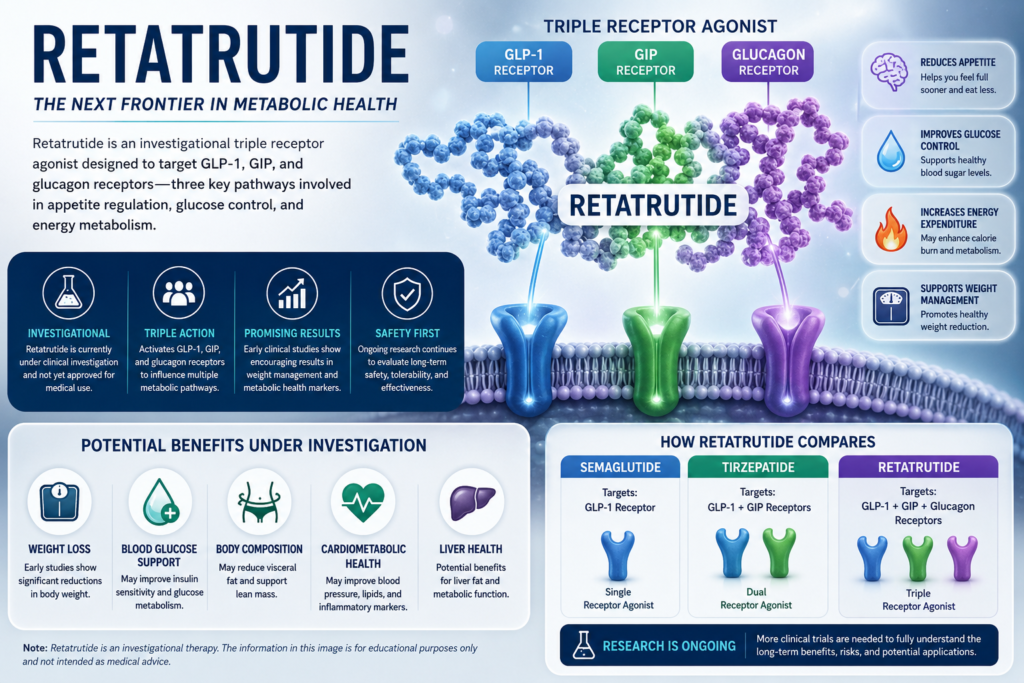
Retatrutide is an investigational peptide developed to target multiple biological pathways involved in appetite regulation, glucose metabolism, and energy balance. Unlike earlier medications that activate a single hormone receptor, Retatrutide was designed to stimulate three different receptors that play important roles in metabolic function:
- GLP-1 (glucagon-like peptide-1) receptor
- GIP (glucose-dependent insulinotropic polypeptide) receptor
- Glucagon receptor
Because it activates three hormone pathways simultaneously, Retatrutide is commonly described as a triple receptor agonist.
Researchers believe this multi-target approach may produce broader metabolic effects than therapies that focus on only one receptor. Current studies are investigating its influence on appetite regulation, body weight, energy expenditure, glucose control, and fat metabolism. While early findings are encouraging, ongoing research is needed to determine its long-term safety and effectiveness across different patient populations.
Why Are So Many People Searching for a Retatrutide Dosage Guide?
The growing interest in Retatrutide has been fueled by scientific publications, medical conferences, and widespread media coverage discussing its potential role in obesity and metabolic disease research.
People searching for a Retatrutide dosage guide are often looking for answers to questions such as:
- How has Retatrutide been studied in clinical trials?
- Why do research studies evaluate different dose levels?
- How does it compare with other incretin-based therapies?
- What have scientists learned so far?
- Is there an approved standard dosage?
These are understandable questions, but it is essential to recognize that research protocols are not the same as approved prescribing information. Clinical trials use carefully controlled study designs to evaluate safety, tolerability, and effectiveness under specific research conditions. The dosing approaches used within these studies are intended for scientific evaluation and should not be interpreted as general recommendations for medical use.
Understanding this distinction helps readers evaluate information more critically and avoid misinformation that may circulate online.
Understanding How Retatrutide Works
One of the reasons Retatrutide has generated so much excitement is its unique mechanism of action. Instead of influencing a single biological pathway, it is designed to activate three hormone receptors that work together to regulate metabolism.
GLP-1 Receptor
GLP-1 is a naturally occurring hormone released after eating. It contributes to normal appetite regulation, promotes feelings of fullness, and supports healthy glucose regulation.
Therapies targeting the GLP-1 receptor have transformed obesity and diabetes research over the past decade. Retatrutide builds upon this foundation by combining GLP-1 activity with two additional metabolic pathways.
GIP Receptor
GIP is another hormone involved in the body’s response to food. Researchers now believe that activating both GLP-1 and GIP receptors together may produce complementary metabolic effects that differ from stimulating either receptor alone.
Studies continue to explore how these pathways interact and whether they can improve overall metabolic function.
Glucagon Receptor
The glucagon receptor adds another layer of complexity to Retatrutide’s design. Although glucagon is traditionally associated with glucose regulation, it also plays an important role in energy expenditure and fat metabolism.
Researchers are investigating whether carefully balancing glucagon receptor activity with GLP-1 and GIP receptor activation may enhance metabolic outcomes while maintaining an acceptable safety profile.
Why Triple Receptor Activation Is Different
To understand the concept behind Retatrutide, imagine an orchestra. A single instrument can produce beautiful music, but a full orchestra creates a richer and more balanced performance by combining multiple instruments.
Researchers apply a similar idea to metabolic medicine. Instead of targeting one hormone pathway, Retatrutide is designed to influence three interconnected biological systems that regulate appetite, energy balance, and metabolism.
This innovative approach has made Retatrutide one of the most closely watched investigational therapies in obesity research. However, scientists continue to evaluate whether these biological advantages translate into meaningful long-term clinical benefits.
The Current State of Retatrutide Research
Retatrutide remains under active clinical investigation. Researchers are conducting studies to better understand its safety, effectiveness, and potential applications in metabolic medicine.
Current clinical research focuses on several important questions:
- How effectively does Retatrutide support weight management?
- What effects does it have on glucose regulation?
- How does it influence body composition?
- What side effects are observed during treatment?
- Which patient populations may benefit most?
- What are the long-term safety considerations?
Early clinical studies have reported encouraging results, particularly regarding weight reduction and metabolic improvements. However, researchers continue collecting additional evidence to determine whether these findings remain consistent over longer periods and across larger, more diverse populations.
Because Retatrutide is still being studied, scientific understanding will continue to evolve as new clinical trial results become available.
Why There Is No Standard Approved Dosage
One of the most common misconceptions is that there is a universally accepted Retatrutide dosage. In reality, there is currently no approved standard dosage because Retatrutide remains an investigational therapy.
During clinical development, researchers evaluate different dosing strategies to answer important scientific questions, including:
- How well participants tolerate treatment.
- How different dose levels affect study outcomes.
- Whether gradual dose adjustments improve tolerability.
- Which patient groups respond most favorably.
- How safety profiles compare across research populations.
These research protocols are developed specifically for clinical trials and are not intended to serve as prescribing guidance for the general public.
For readers seeking trustworthy information, the most reliable sources remain peer-reviewed scientific journals, official clinical trial registries, and guidance from qualified healthcare professionals.
Key Takeaways
Retatrutide represents an exciting advancement in metabolic research because it combines GLP-1, GIP, and glucagon receptor activation within a single investigational peptide. This innovative triple receptor approach has generated significant scientific interest and contributed to the growing number of people searching for a Retatrutide dosage guide.
While early research findings are promising, Retatrutide is still undergoing clinical evaluation, and there is no universally approved dosing standard for routine medical use. Understanding the difference between research protocols and approved prescribing information is essential when reviewing information online.
As ongoing clinical trials continue to publish new findings, researchers will gain a clearer understanding of Retatrutide’s long-term safety, effectiveness, and potential role in the future of obesity and metabolic health treatment.
What Have Clinical Trials Revealed So Far?
Retatrutide has attracted worldwide attention because of encouraging findings from early clinical research. Scientists are investigating whether its triple receptor mechanism can improve outcomes in obesity and metabolic disorders beyond what has been observed with earlier incretin-based therapies.
Clinical trials are designed to answer important scientific questions under carefully controlled conditions. Researchers evaluate not only whether an investigational therapy produces measurable benefits but also how consistently those benefits occur, how well participants tolerate treatment, and whether any safety concerns emerge over time.
Although published studies have reported promising findings, Retatrutide remains an investigational medicine. Additional research involving larger populations and longer follow-up periods is still required before researchers can fully understand its long-term safety profile and overall effectiveness.
The Primary Goals of Retatrutide Research
Every clinical trial begins with clearly defined objectives. Rather than focusing on a single outcome, investigators examine multiple aspects of metabolic health to understand how Retatrutide influences the body.
Current research is exploring questions such as:
- Can Retatrutide support meaningful weight reduction?
- How does it influence glucose regulation?
- What changes occur in body composition?
- Does it improve markers associated with cardiometabolic health?
- How well is treatment tolerated over extended periods?
- Which patient populations appear to benefit the most?
Answering these questions requires years of carefully monitored research involving thousands of study participants.
Weight Management Findings
One of the most widely discussed aspects of Retatrutide research involves its potential role in weight management.
Clinical studies have reported substantial reductions in body weight among many participants compared with placebo. These findings have generated significant interest because obesity is a complex chronic disease associated with numerous health complications, including cardiovascular disease, type 2 diabetes, and certain forms of cancer.
Researchers believe several biological mechanisms may contribute to these outcomes, including:
- Reduced appetite.
- Increased feelings of fullness after eating.
- Lower overall calorie intake.
- Changes in energy expenditure.
- Improvements in metabolic efficiency.
It is important to recognize that individual responses vary considerably. Factors such as genetics, lifestyle, medical history, dietary habits, physical activity, and overall health can all influence study outcomes. Ongoing research aims to better understand why some participants respond differently than others.
Beyond Weight Loss: Additional Areas of Investigation
Although weight reduction receives much of the public attention, researchers are evaluating a much broader range of potential metabolic effects.
Blood Glucose Regulation
Retatrutide’s effects on glucose metabolism continue to be an important focus of investigation. Researchers are studying how the peptide influences insulin function and overall glucose control as part of its broader metabolic effects.
These findings may contribute to a better understanding of metabolic disease, although further research is necessary before conclusions can be drawn regarding specific clinical applications.
Body Composition
Modern obesity research increasingly focuses on body composition rather than body weight alone.
Scientists are evaluating whether Retatrutide influences:
- Visceral fat.
- Waist circumference.
- Body fat percentage.
- Lean body mass.
- Liver fat accumulation.
These measurements provide valuable information about overall metabolic health that extends beyond simple changes in body weight.
Cardiometabolic Health
Researchers are also monitoring several health markers associated with cardiovascular and metabolic function, including:
- Blood pressure.
- Cholesterol levels.
- Triglycerides.
- Insulin sensitivity.
- Inflammatory biomarkers.
While early findings have been encouraging, larger clinical trials are needed to determine whether improvements in these measurements translate into meaningful long-term health outcomes.
How Researchers Evaluate Success
Clinical research involves far more than measuring changes on a scale.
Investigators assess numerous health indicators throughout each study to develop a comprehensive understanding of Retatrutide’s effects.
Primary Endpoints
Primary endpoints represent the main objectives established before a study begins.
Examples include:
- Percentage change in body weight.
- Overall safety.
- Changes in glucose regulation.
These outcomes determine whether the investigational therapy achieves the primary goals of the research.
Secondary Endpoints
Secondary endpoints provide additional insight into how participants respond to treatment.
Common measurements include:
- Waist circumference.
- Body mass index (BMI).
- Body composition.
- Blood pressure.
- Lipid profiles.
- Quality of life assessments.
- Physical functioning.
Together, these measurements help researchers evaluate the broader impact of Retatrutide on overall health.
Potential Benefits Under Investigation
Researchers continue exploring several possible benefits associated with Retatrutide.
Appetite Regulation
One of the most consistent observations in incretin research involves appetite regulation.
Participants in clinical studies have reported:
- Feeling satisfied sooner during meals.
- Reduced desire to snack.
- Improved control over food intake.
- Less frequent hunger between meals.
Researchers believe these observations are primarily related to GLP-1 receptor activation while the additional GIP and glucagon pathways may further influence overall metabolic regulation.
Energy Balance
Unlike therapies that primarily affect appetite alone, Retatrutide was designed to influence several aspects of energy metabolism.
Scientists continue studying whether combined receptor activation affects:
- Energy expenditure.
- Fat utilization.
- Metabolic efficiency.
- Overall energy balance.
These investigations remain an active area of metabolic research.
Metabolic Flexibility
Metabolic flexibility describes the body’s ability to efficiently shift between carbohydrates and fat as fuel sources.
Researchers are evaluating whether Retatrutide influences this important aspect of metabolic function and whether such changes contribute to improved overall health.
Safety Observations from Clinical Studies
Safety evaluation remains one of the most important components of every clinical trial.
Researchers carefully monitor participants throughout each study to identify:
- Adverse events.
- Laboratory abnormalities.
- Treatment discontinuations.
- Serious medical events.
- Long-term safety trends.
This information helps determine whether the potential benefits outweigh possible risks.
Gastrointestinal Effects
As with several therapies that affect incretin pathways, gastrointestinal symptoms have been among the most commonly reported observations during clinical research.
Reported events have included:
- Nausea.
- Vomiting.
- Diarrhea.
- Constipation.
- Reduced appetite.
Researchers continue evaluating these findings to better understand their frequency, severity, and relationship to treatment.
Ongoing Safety Monitoring
Clinical trials include regular health assessments throughout the study period.
These evaluations may include:
- Blood tests.
- Vital sign measurements.
- Organ function assessments.
- Electrocardiograms when appropriate.
- Participant questionnaires.
Continuous monitoring allows researchers to identify patterns that may not become apparent during shorter investigations.
Retatrutide Compared with Semaglutide
Comparisons between Retatrutide and Semaglutide are common because both therapies target pathways involved in appetite regulation and metabolic health.
The most significant difference lies in their biological mechanisms.
Semaglutide activates only the GLP-1 receptor, whereas Retatrutide was specifically designed to activate GLP-1, GIP, and glucagon receptors simultaneously.
Researchers are investigating whether this broader mechanism may produce additional metabolic effects, although definitive conclusions require further clinical evidence.
Retatrutide Compared with Tirzepatide
Another frequent comparison involves Tirzepatide.
Both investigational pathways share activation of the GLP-1 and GIP receptors. However, Retatrutide also includes glucagon receptor activity, making it a triple receptor agonist rather than a dual receptor agonist.
Scientists continue studying whether this additional mechanism contributes to differences in metabolic outcomes, safety, or long-term effectiveness.
As larger clinical studies become available, researchers expect to gain a clearer understanding of how these therapies compare across diverse patient populations.
Common Misconceptions About Retatrutide
The rapid growth in public interest has also contributed to widespread misinformation.
Myth: Retatrutide Is Already Widely Approved
Fact: Retatrutide remains under clinical investigation, and regulatory decisions depend on the outcome of ongoing research.
Myth: Everyone Experiences the Same Results
Fact: Individual responses vary based on numerous biological and lifestyle factors.
Myth: Personal Testimonials Are Equivalent to Scientific Evidence
Fact: While personal experiences can be informative, peer-reviewed clinical research remains the most reliable source of evidence regarding safety and effectiveness.
Why Research Continues
Although early findings have generated excitement, several important questions remain unanswered.
Researchers continue investigating:
- Long-term effectiveness.
- Long-term safety.
- Cardiovascular outcomes.
- Liver health.
- Durability of treatment effects.
- Differences between patient populations.
- Potential future therapeutic applications.
These studies will help determine the future role of Retatrutide in metabolic medicine and provide the evidence needed for regulatory review.
Key Takeaways
Current research suggests that Retatrutide represents an important advancement in metabolic science because of its innovative triple receptor mechanism. Early clinical studies have reported encouraging findings related to weight management and metabolic health, but the therapy remains investigational and continues to undergo rigorous scientific evaluation.
Researchers are examining not only its effectiveness but also its long-term safety, effects on body composition, glucose regulation, cardiovascular health, and overall metabolic function. As additional clinical trial results become available, the medical community will gain a clearer understanding of where Retatrutide may fit within future approaches to obesity and metabolic disease management.
Frequently Asked Questions About Retatrutide
As interest in Retatrutide continues to grow, many people have similar questions about its development, research, and potential future applications. The answers below summarize the current scientific understanding.
Is Retatrutide approved for medical use?
Retatrutide remains an investigational medicine. Regulatory authorities continue to evaluate evidence from clinical trials before determining whether it should be approved for specific medical indications.
Why is Retatrutide receiving so much attention?
Researchers are interested in Retatrutide because it activates three hormone receptors involved in metabolism: GLP-1, GIP, and glucagon. This triple receptor approach is relatively new and may offer advantages that continue to be investigated in clinical research.
How is Retatrutide different from earlier therapies?
Many earlier therapies target one metabolic pathway, while Retatrutide was designed to influence three complementary biological systems simultaneously. Scientists are studying whether this broader mechanism improves overall metabolic outcomes.
Can researchers predict who will respond best?
Not yet. Clinical studies continue to investigate how factors such as genetics, age, baseline metabolic health, lifestyle, and existing medical conditions influence individual responses.
Does Retatrutide only affect body weight?
No. Researchers are also evaluating its potential effects on glucose regulation, body composition, liver fat, cardiovascular risk markers, and other aspects of metabolic health.
Why are long-term studies important?
Many therapies produce encouraging short-term results, but long-term research is necessary to understand durability, safety, and whether benefits remain consistent over time.
Are side effects still being evaluated?
Yes. Safety monitoring is a major component of every clinical trial. Researchers continue collecting information about adverse events, laboratory findings, and participant experiences throughout ongoing studies.
Can online testimonials replace clinical evidence?
No. Personal experiences may be interesting to read, but they do not provide the same level of scientific reliability as carefully conducted, peer-reviewed clinical research involving large groups of participants.
Where can readers find reliable information?
The most trustworthy sources include peer-reviewed medical journals, official clinical trial registries, recognized medical organizations, and guidance from qualified healthcare professionals.
What does the future hold for Retatrutide?
Ongoing research will determine its long-term safety, effectiveness, potential approved uses, and overall role in obesity and metabolic medicine.
The Future of Retatrutide Research
Retatrutide represents a significant milestone in the evolution of metabolic science. Rather than focusing on a single biological target, it reflects a growing understanding that obesity and metabolic disease involve numerous interconnected pathways.
Future clinical research is expected to explore several important areas.
Larger Phase 3 Clinical Trials
Large-scale studies involving thousands of participants will help researchers better understand how Retatrutide performs across different ages, ethnic backgrounds, and medical conditions. These studies also provide the statistical strength needed for regulatory review.
Long-Term Safety
Understanding long-term safety remains essential for any therapy intended for chronic conditions. Researchers continue monitoring participants over extended periods to identify trends that may not appear during shorter investigations.
Cardiovascular Outcomes
Many metabolic therapies are now evaluated for their effects on cardiovascular health. Future studies may help determine whether improvements in weight and metabolic markers translate into meaningful reductions in cardiovascular risk.
Liver Health
Researchers are also investigating whether therapies affecting incretin pathways may influence liver fat and other markers associated with metabolic liver disease. This remains an active and evolving area of scientific research.
Personalized Medicine
Advances in genetics, biomarkers, and precision medicine may eventually help identify which individuals are most likely to benefit from specific metabolic therapies. Although this field is still developing, it represents an exciting direction for future research.
Why Scientific Evidence Matters
The internet has made health information more accessible than ever before. Unfortunately, it has also increased the spread of misinformation.
When researching emerging therapies like Retatrutide, readers should consider several questions:
- Is the information supported by peer-reviewed research?
- Are claims presented with appropriate scientific context?
- Does the source distinguish between established evidence and ongoing investigation?
- Are limitations openly discussed?
- Are potential risks acknowledged alongside possible benefits?
Approaching new medical developments with curiosity and critical thinking helps readers make more informed decisions and better understand evolving scientific evidence.
How to Stay Informed About Retatrutide
Scientific knowledge changes as new studies are completed. Staying informed means relying on credible sources rather than isolated headlines or social media discussions.
Useful strategies include:
- Following updates published in peer-reviewed medical journals.
- Reviewing official clinical trial registries for study progress.
- Reading information from respected medical organizations.
- Discussing emerging research with qualified healthcare professionals.
- Comparing information across multiple reputable sources before drawing conclusions.
This evidence-based approach provides a clearer understanding of how scientific knowledge develops over time.
Final Thoughts
Retatrutide has become one of the most closely watched investigational therapies in metabolic research because of its innovative triple receptor mechanism and encouraging early clinical findings. By simultaneously targeting GLP-1, GIP, and glucagon receptors, researchers hope to better understand how multiple biological pathways can work together to influence metabolism, appetite regulation, and overall health.
Although current evidence has generated significant optimism, Retatrutide remains under clinical investigation. Larger studies and longer follow-up periods will be essential for determining its long-term safety, effectiveness, and potential role in future medical practice.
For anyone searching for a Retatrutide dosage guide, the most important takeaway is that current dosing information belongs within the context of controlled clinical research. As the scientific community continues to gather evidence, readers should rely on peer-reviewed publications and qualified healthcare professionals rather than unverified online claims.
The story of Retatrutide is still unfolding, and each new clinical study brings researchers closer to understanding its full potential. Whether it ultimately becomes a widely used therapy or helps inspire the next generation of metabolic medicines, its development is already expanding scientific knowledge and shaping the future of obesity research.
Key Takeaways
- Retatrutide is an investigational triple receptor agonist targeting GLP-1, GIP, and glucagon receptors.
- Early clinical research has reported encouraging findings in weight management and metabolic health.
- Researchers continue evaluating long-term safety, effectiveness, and potential future clinical applications.
- Regulatory approval depends on the results of ongoing clinical trials and comprehensive scientific review.
- Reliable information should come from peer-reviewed research, official clinical trial resources, and qualified healthcare professionals.
- Scientific understanding will continue to evolve as additional evidence becomes available.
References
- Peer-reviewed articles published in The New England Journal of Medicine.
- Research indexed by PubMed.
- Clinical study records available through ClinicalTrials.gov.